Make the Car — and You — Visible
Once you're stopped, turn on your hazard lights immediately and turn your wheels away from traffic if you're on a slope. If you carry flares or a reflective triangle, set them out behind the car. If you're going to stay in the vehicle, keep your seatbelt on and stay on the passenger side away from traffic — not standing behind the car checking the trunk. On high-speed roads like I-75 or the Veterans Expressway, exit only if you can do so safely on the passenger side, and get well clear of the traffic lane, ideally behind a guardrail if one is present.
When to Call 911 First
A few situations call for 911 or Florida Highway Patrol before anything else: you're stopped on a bridge or overpass with no shoulder (the Howard Frankland Bridge and the Selmon's elevated sections are the two worst offenders in Tampa), you're stuck in a live travel lane because you couldn't coast clear, it's after dark with poor visibility, or you simply feel unsafe where you've landed. FHP can reposition you to a safer spot or provide a police presence while you wait, which matters more than people think on a road like I-4 during rush hour.
Walk to a Station, or Call for Delivery?
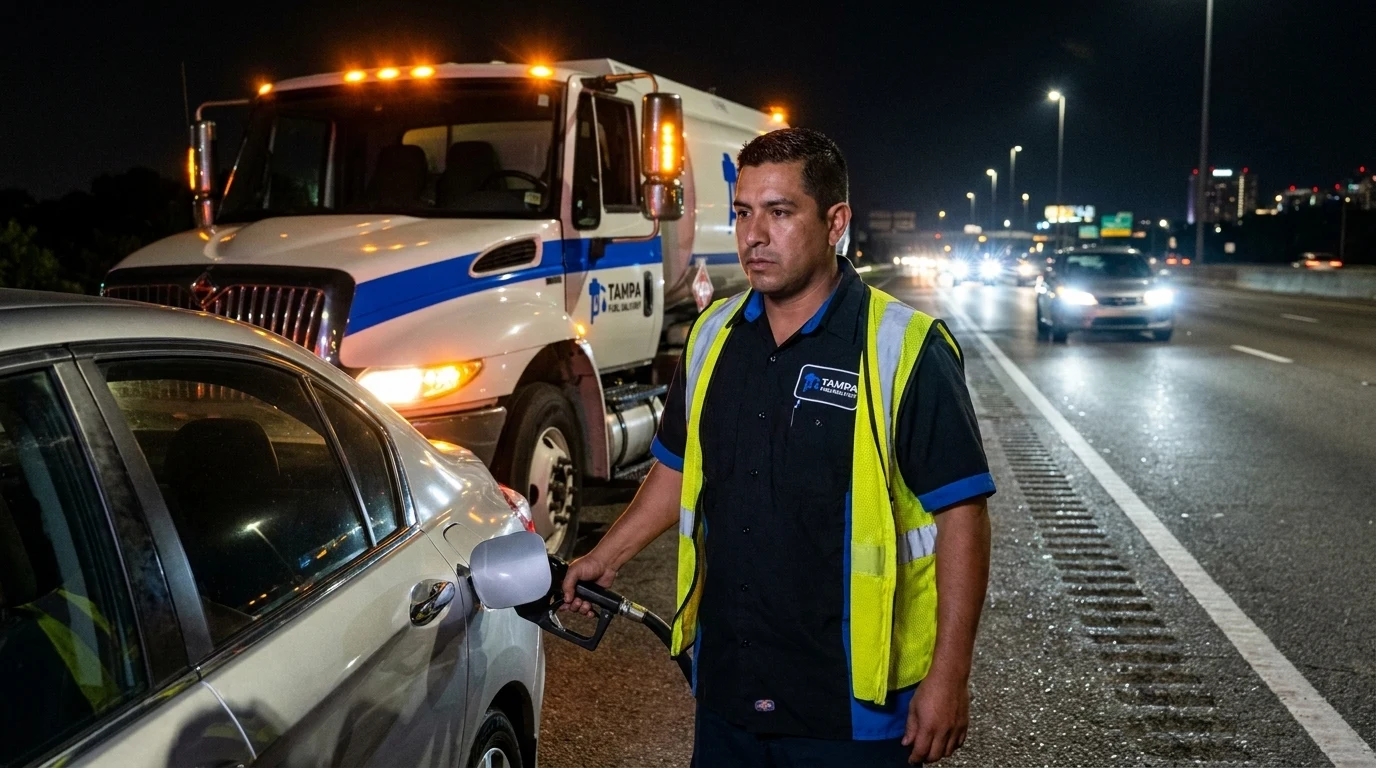
Once you and the car are safely off the road, the next decision is whether to walk to a gas station or call for delivery. Walking only makes sense if you're on a surface street with a sidewalk or shoulder wide enough to walk safely, a station is genuinely close (a quarter mile or less), and it's daylight with decent weather — think stalling out on Dale Mabry, Fowler, or Bayshore Blvd with a station in sight. It almost never makes sense on a limited-access highway: there's no legal or safe way to walk along I-275, I-4, the Selmon, or the Veterans Expressway, and even a short walk on the shoulder next to 70 mph traffic is a real risk. That's the exact situation emergency roadside fuel delivery exists for — a truck comes to your exact location with gas or diesel already on board, so you never have to leave the car or find a gas can.
What Happens When You Call
Tell dispatch your general location (mile marker, nearest exit, or just "I-275 northbound past Busch Blvd") and what you're driving. In and around the city of Tampa, where dispatch is based just off I-275 in the downtown core, most calls get a truck on scene in 30 to 60 minutes, and the driver pulls up, runs a metered nozzle to your tank, and gets you back on the road without you ever stepping onto the shoulder.
Why This Matters More in Tampa's Heat
Standing on a shoulder in July or August Tampa heat is its own hazard — heat exhaustion sets in faster than people expect, especially if you're already stressed from being stranded. Stay in the car with hazards on and windows cracked if it's safe to do so, rather than pacing around outside in full sun while you wait.
A Short Checklist for Next Time
- Watch the gauge on any drive longer than your normal commute, especially heading out toward Plant City or Wesley Chapel where stations thin out
- Keep hazard triangles or flares in the trunk, not buried under luggage
- Save a dispatch number in your phone before you need it, not while you're stalled
- Remember that highway shoulders — especially bridges and elevated sections — are for getting clear of traffic, not for waiting around outside the car
 I-275 · TAMPA