The Single Most Important Rule
If you realize the mistake before starting the engine — you notice at the pump, or a passenger catches it — do not start the car. Turn the key off if it's already in the ignition, put the vehicle in park, and leave it alone. Whatever inconvenience comes from wrong fuel sitting in an empty or near-empty tank is far less than the damage from actually circulating it through the fuel system. This one decision is the difference between a minor inconvenience and a real repair bill.
If the Engine's Already Running
If you've already driven off and the engine is running rough, hesitating, or stalling, get the car safely off the road the same way you would for any breakdown — shoulder, hazards, out of the travel lane — and shut it off. Don't try to "drive it out" or hope it clears itself; continuing to run a diesel engine on gasoline, in particular, tends to make the damage worse the longer it goes.
What Actually Fixes It
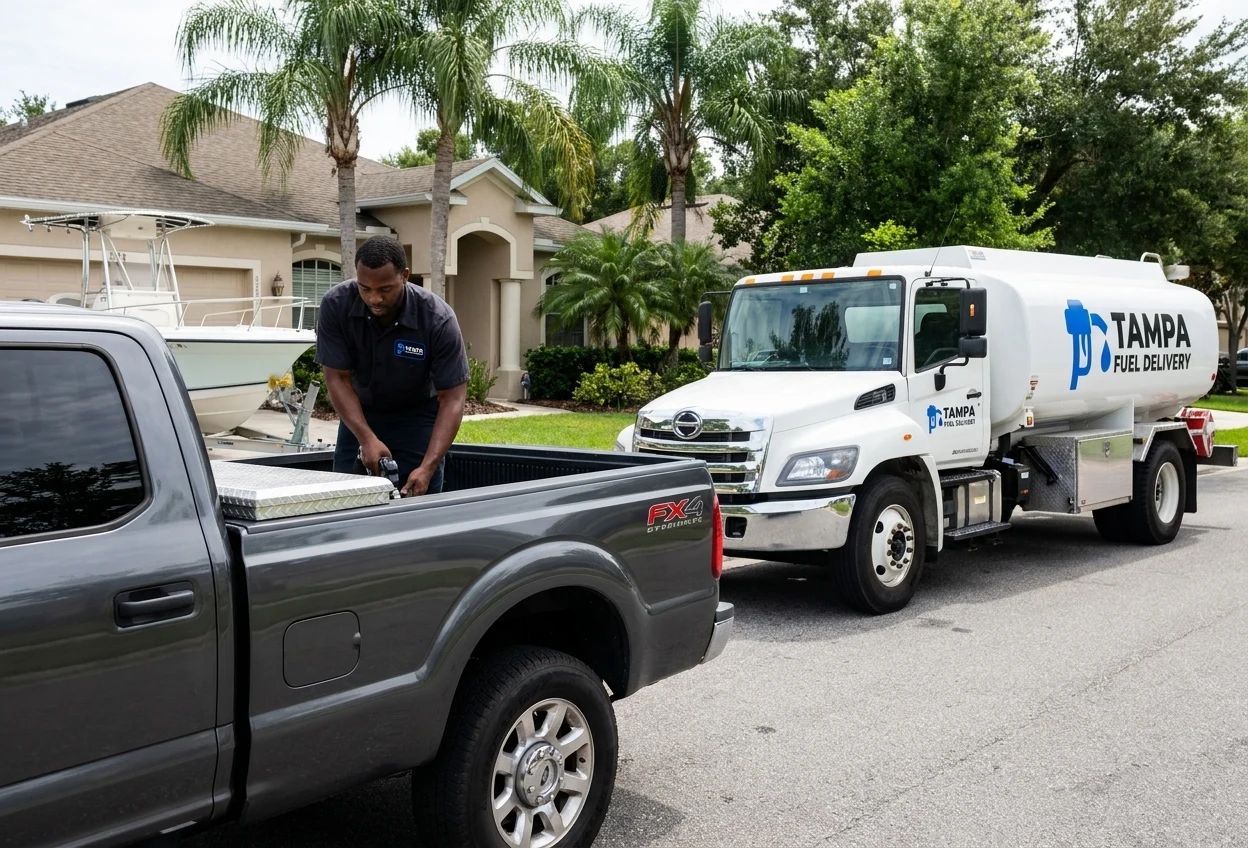
There's no home remedy for this one. The tank needs to be drained and, in more serious cases, the fuel lines and filter flushed before the correct fuel goes back in — not something to attempt in a parking lot. Depending on how far things got, that's either a job for a shop with a lift and drain equipment, or in some cases something that can be handled on-site before the vehicle ever needs to run again. Our diesel delivery service exists mainly for straightforward fills, but if you call us about a misfuel situation, we can talk through what's actually happened and point you toward the right next step — sometimes that's help getting the tank drained, sometimes it's a tow to a shop equipped to flush the system properly. We'll tell you honestly which situation you're in rather than guess.
How This Actually Happens
It's easier to mix up than people assume. Diesel pump handles are usually a different size and color specifically to prevent this, but a distracted fill at an unfamiliar station, a rental car with an unfamiliar tank, or simply grabbing the wrong nozzle out of habit all happen more than you'd think. It's especially common with drivers who don't regularly drive a diesel vehicle — a family borrowing a relative's diesel truck for a move, for instance, or a USF-area student filling up a friend's diesel car between classes without thinking twice about which handle they grabbed.
A Few Seconds That Prevent the Whole Problem
Before you squeeze the handle, glance at the label above the nozzle and the fuel door on the vehicle — diesel pumps are labeled clearly, and most vehicles have their fuel type printed right on the inside of the fuel door or the cap itself. That one glance is the entire prevention plan, and it takes less time than finding your card in your wallet.
What the Repair Actually Costs
The price of getting it wrong varies a lot depending on how far the mistake went. Catching diesel in a gas tank before the engine ever starts might mean nothing more than the time it takes to drain and refill it correctly. Running a diesel engine on gasoline for even a few miles, on the other hand, can mean a damaged injection pump and injectors — a repair that runs into the thousands rather than the hundreds. That gap is exactly why the "don't start it" rule matters more than almost anything else in this situation.
Rental Cars and Borrowed Vehicles Are the Riskiest Moment
Misfueling happens disproportionately in unfamiliar vehicles — a rental car picked up at Tampa International with a tank you've never filled before, a friend's diesel truck borrowed for a weekend project, a spouse's car that normally isn't your responsibility to fuel. The fix isn't complicated: before you fill any vehicle that isn't your daily driver, take the extra five seconds to confirm gas or diesel rather than assuming.
 MISFUEL · WHAT TO DO